E-Ink Sticky Note Concept
While brainstorming applications for E-Ink displays, I came up with a digital “sticky note” touchscreen notepad, primarily to reduce desk clutter as well as add a bit of intentional fun by adding a few additional features.
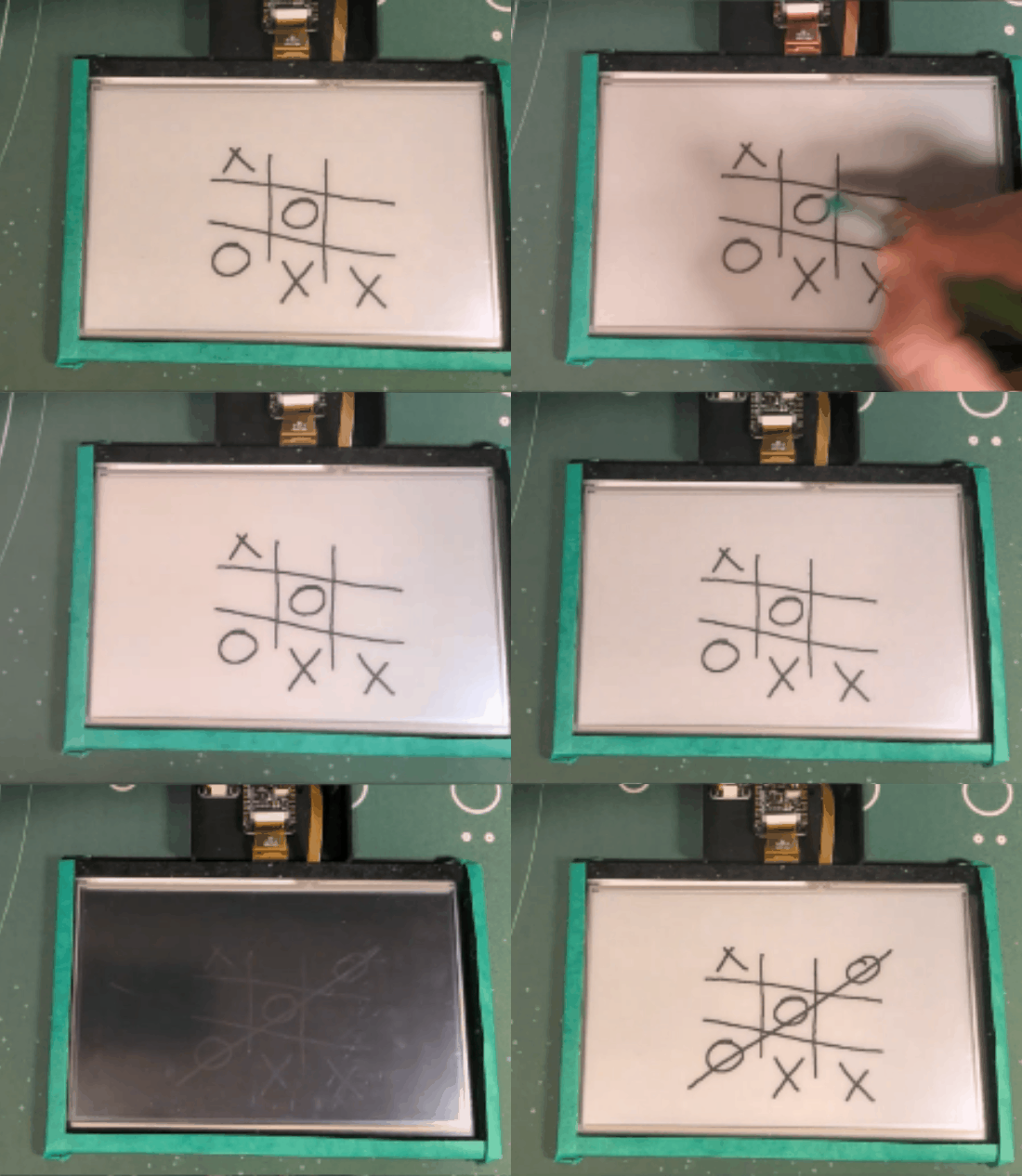
I see E-Ink as a very functional and unique display technology that can bridge the gap between fun tech applications and an analog feel, and as we move into a very tech-heavy future I could see it getting used more as an escape back to a nostalgic tactile feeling. A virtual blend between physical paper and digital screens, I wanted to see if there were more casual applications of the technology, not unlike my DisPlay Watch concept. In this case, when volleying ideas with a friend, we came up with a desktop touchscreen E-Ink display. As someone with sticky notes all over my desk, the application to save desk space seemed valuable, but what I really got excited for was if we could communicate between multiple of the displays remotely, in a “closed loop” way. I think of playing games with a pen and paper, as I used to do sitting in restaurants with my family, but now being able to do the same while sitting across the city. A game of tic tac toe between myself and my wife, played out over the course of the day at our respective jobs. Being able to send fun notes or romantic greetings at the lift of a pen, without pulling out your phone. Again like the DisPlay watch this idea is about intentionality and fun, not efficiency.
For the prototype off-the-shelf electronics were enough to get started, with a E-Ink display, touchscreen, driver boards for each and a microcontroller to run the system. I designed a rough enclosure to align the touchscreen with the display, and ran through calibration and some quick software using Claude AI. After testing the concept, the biggest UI issue is the lag between a successful touchscreen press and the screen display updating (seen in real time in the video below), which is driven by the physical limitations of the display technology itself. I need to do more reading on how the E-Ink consumer electronics like E-Ink phones and laptops are able to refresh so quickly, and if those methods seem transferable to this application, I’ll build another unit to test the remote-play capabilities. I’d also be curious to look into Mesh Net as the communication method, which uses radio to send the data, as that would negate having to setup wifi credentials and moves the device away from the IoT sphere.
You can see the lag in real time here. Originally the E-Ink library had the refresh lag even longer at 3 minutes, so I reduced it to 10s for this demo and risked damage to the display from particle fatigue and heat buildup
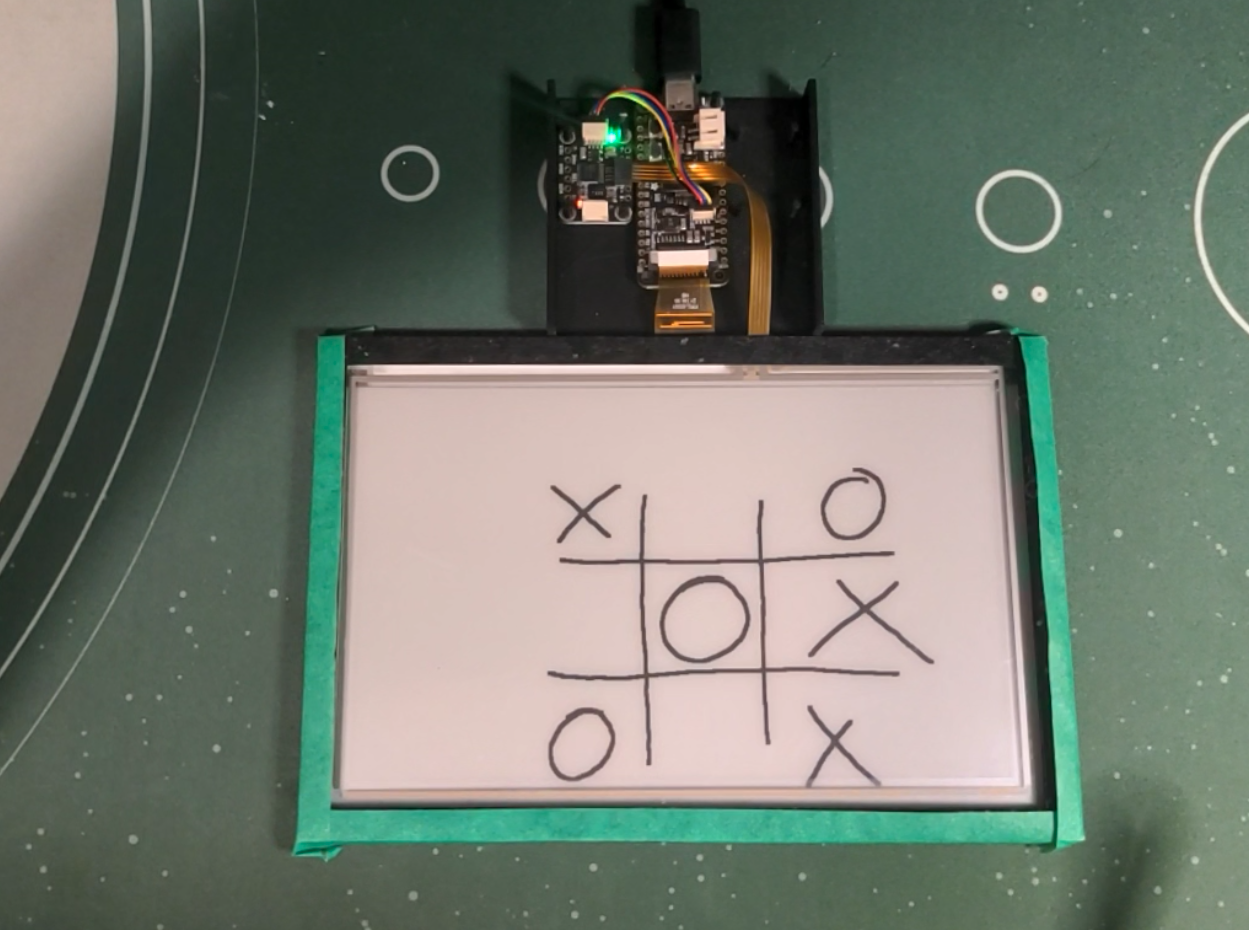
Setup was easy, with the touchscreen and displays neatly stacked and the driver boards connected using stemma connectors - no soldering required!