The Watering Hole - Electronic Watering Bulb Concept
This electronic watering device would sense the moisture content of the soil and selectively release water, using a electromagnetic valve mechanism, based on what a preset ideal moisture level was for that plant.
I made a working prototype of the mechanism we wanted, but ultimately we moved on to greater ideas before finishing the fully functional device.
This idea came about during a usual brainstorm with friends, where we throw out our most recent crazy ideas and see what sticks. In this case, everyone had dying houseplants. We had seen the bottom-watering plant pots, but thought that with the variety of houseplants in the home, and their different watering needs, there might be a use for a system that could be tailored on-the-fly for any species of plant. We thought this could be accomplished with a microcontroller that senses the soil moisture level and released additional water into the pot when the value dropped below a threshold. On my end, I had gained a lot of recent experience building watertight systems in my role at Eight Sleep, so the design felt very within my wheelhouse.
The moisture level sensor is a simple off-the-shelf PCB, and the logic for releasing the water could be a very simple on-off, as long as we tested the real-life behavior and baked any differences into the software. After sourcing the electronics, the next step was designing how to actuate the water releasing, with the constraints that we wanted it to be run off of a battery and not accidentally leak if there was power loss, and thus needed it to both keep the water sealed when unpowered, and use relatively little power when actuating.
Thinking through options using motors, linkage mechanisms, and solenoids, I did a brainstorm of other devices that have the same requirements, and came to an interesting one: the automatic water bottle feeder that you might find in a hamster cage. It is completely unpowered, and released water when the pet pushes against a metal ball holding back the water flow. I wanted to avoid using moving parts to physically push on the metal ball in our design, so one elegant trick I came up with was to try using an electromagnet to move the ball instead. A coil of wire wrapped right above ball would be inactive without power, but once a current is applied through the coil a magnetic field appears, causing the ball to move just enough the break the seal and cause water to flow.
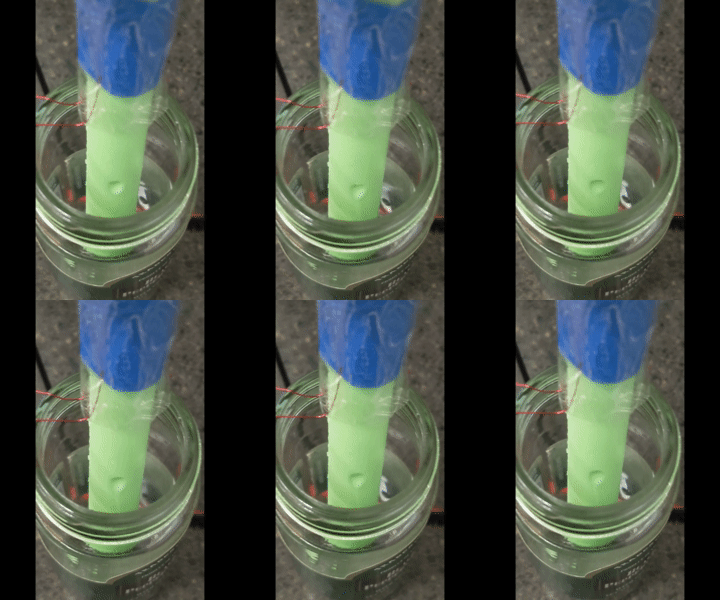
In the function prototypes shown, I was using a 9v battery to power the coil, and was pretty happy with the result, however if this project is ever continued we will want to run the analysis on the power requirements for both this actuation solution and the circuitry to check what battery capacity will get us to our goal.
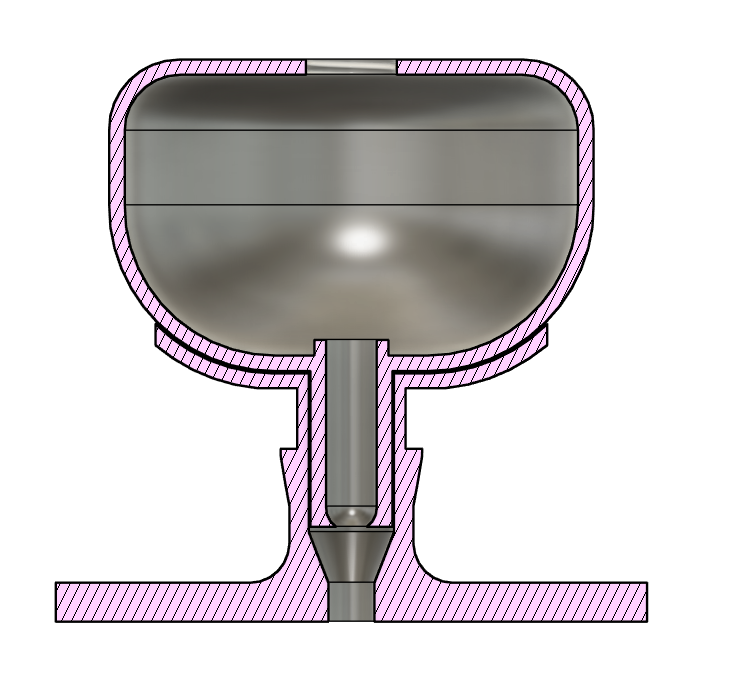
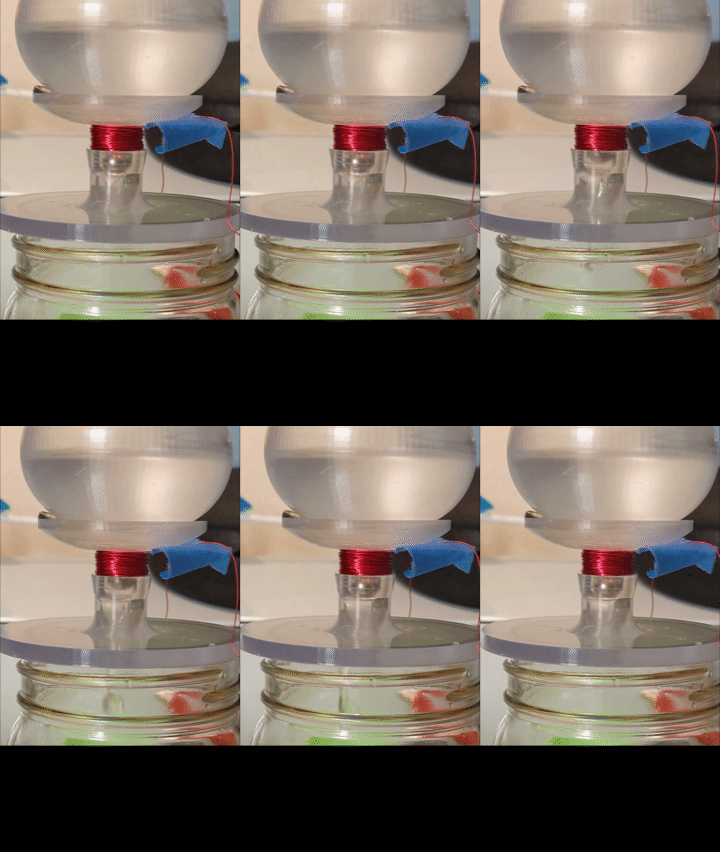
The working electromagnet mechanism shown right, long with a cross section of the CAD on the left. You can see the rounded tip of the reservoir where the steel ball lives, as well as the indentation to locate the wire coil.
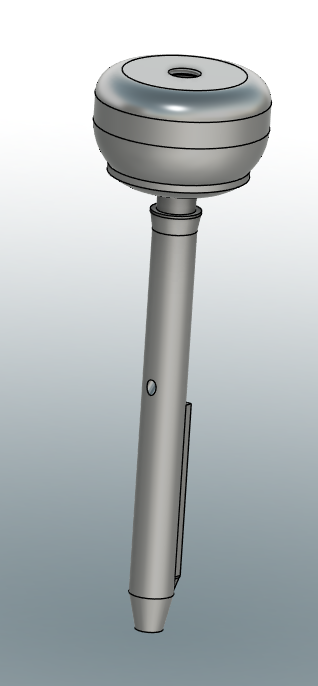
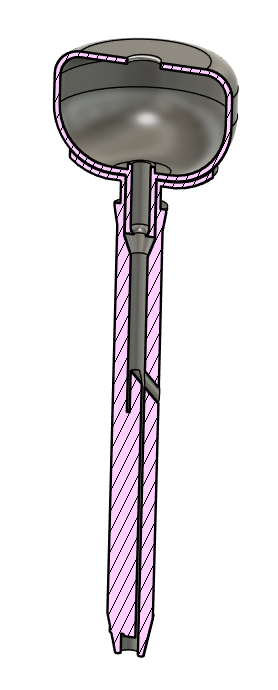
In the final version, we wanted the watering bulb to be staked into the pot, with a removeable reservoir at the top for easy refilling. The CAD above shows the shape and cross section, and the image right was a test to check that our geometry would allow flow as expected.
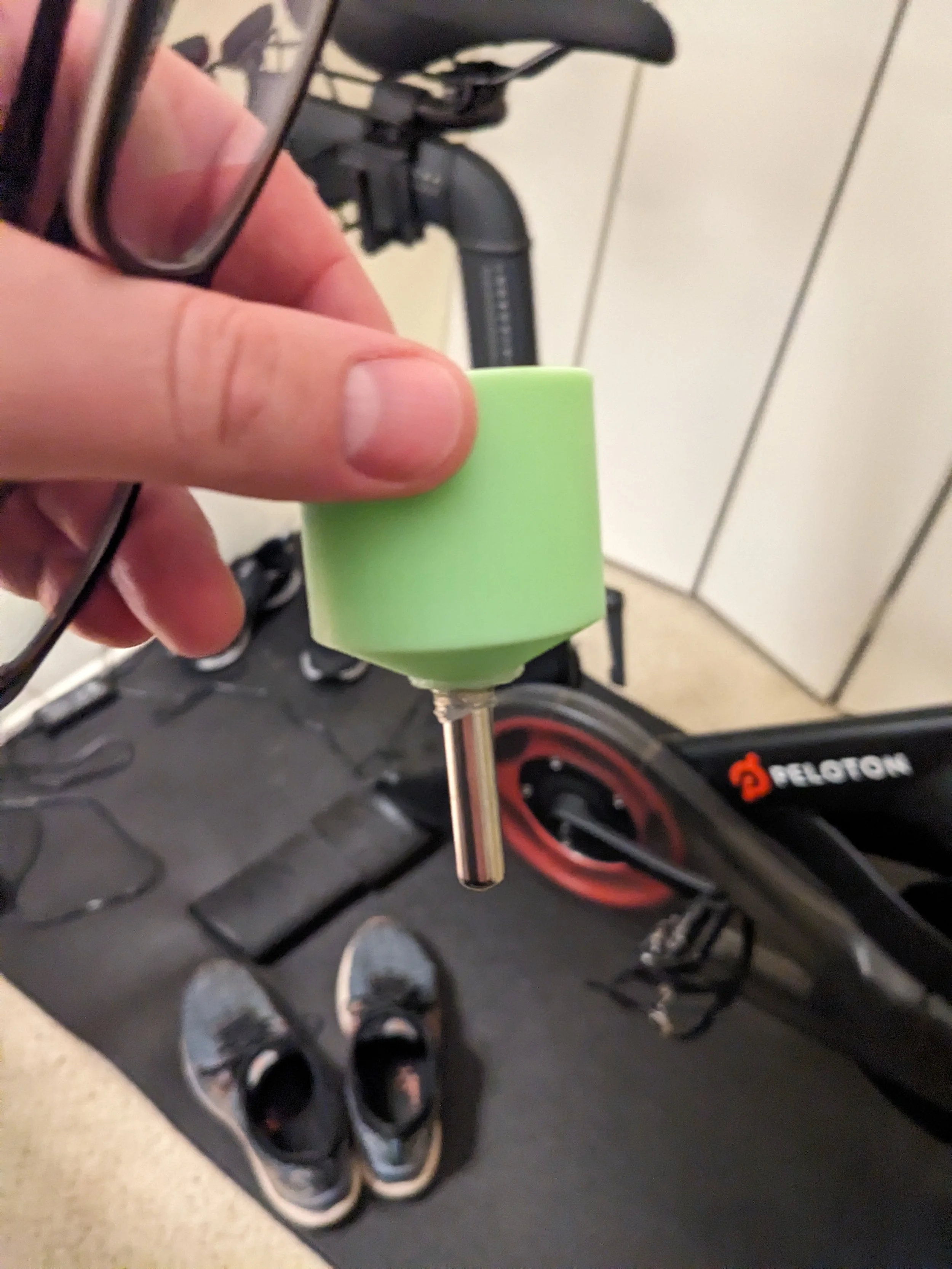
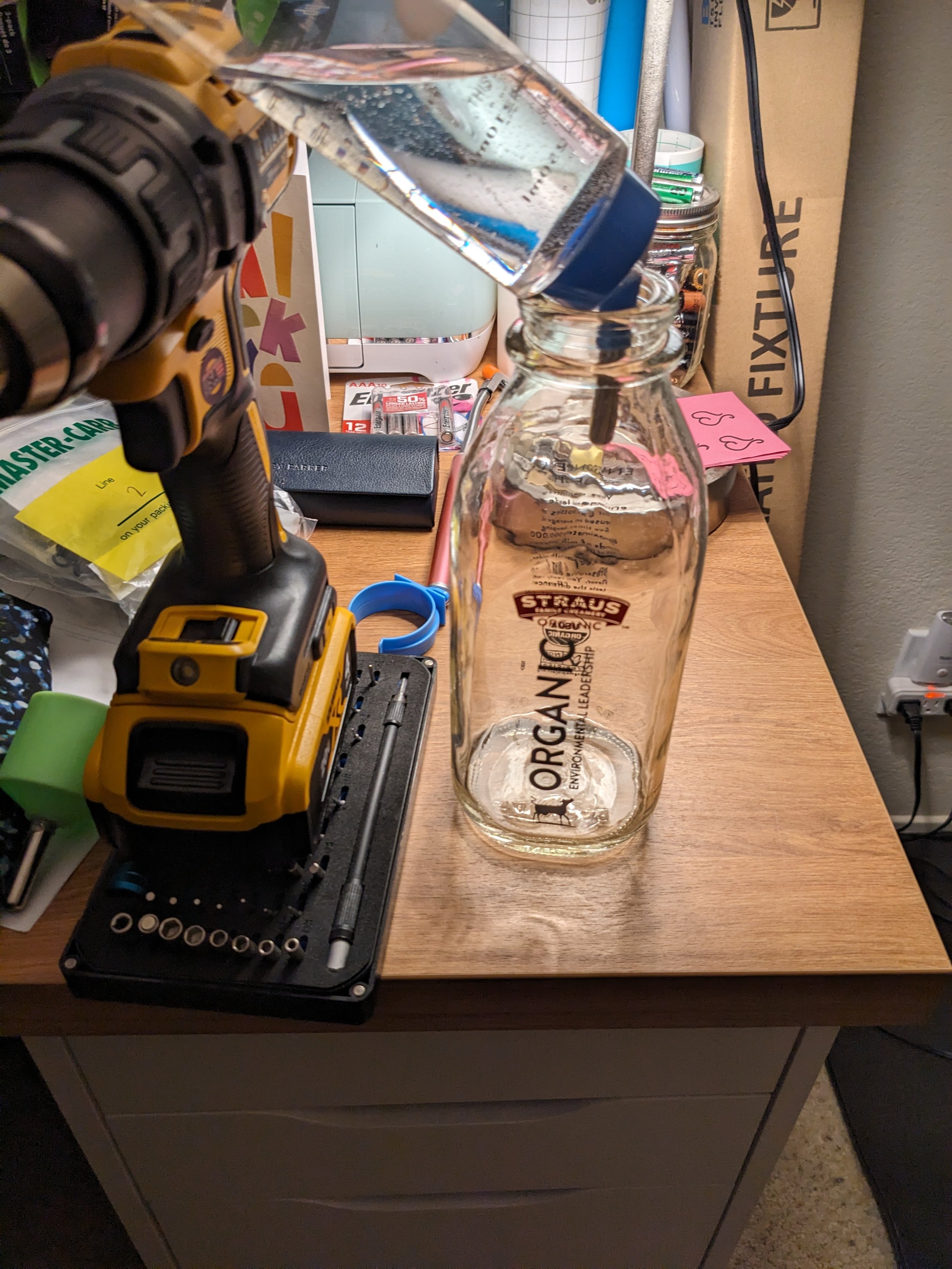
The investigation into hamster water bottles, first doing a quick check to understand the mechanism (right) and then tearing down the parts to adapt the mechanism into our own design (left)